
Livestock guardian dogs, often called LGDs, play an essential role on farms across Alabama. They provide constant protection for goats, sheep, chickens, and other vulnerable animals. Many Alabama farmers depend on these dogs because predators like coyotes, foxes, stray dogs, bobcats, and even the occasional black bear can threaten livestock throughout the year. A well trained guardian dog creates a calm and secure environment, giving farmers the confidence that their animals are watched over day and night.
Alabama’s mix of open pasture, wooded edges, rolling hills, and rural acreage is ideal for these powerful and loyal dogs. Each breed brings its own strengths to the job, which helps farmers select the right companion based on the size of their property and the kind of animals they raise. The following breeds are among the most trusted and proven livestock guardians in the state.
Great Pyrenees
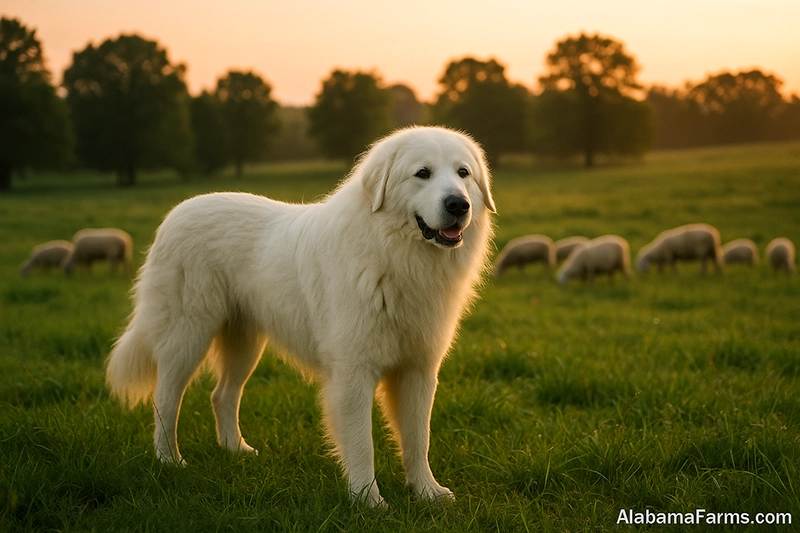
The Great Pyrenees is one of the most recognizable guardian breeds on Alabama farms. Known for its thick white coat and gentle expression, the breed typically forms strong bonds with the animals it protects. They work quietly and confidently, which helps reduce stress among livestock. Many farmers appreciate that Great Pyrenees dogs are both patient and nurturing, making them a safe and reliable choice for families with children who spend time around the animals.
Their calm nature does not take away from their strength or protective instincts. A Great Pyrenees can stand its ground against predators and will patrol a pasture throughout the night. The breed also handles Alabama’s changing climate fairly well. Their heavy coats provide excellent protection in the winter while shady resting spots help them stay comfortable in the summer.
Anatolian Shepherd
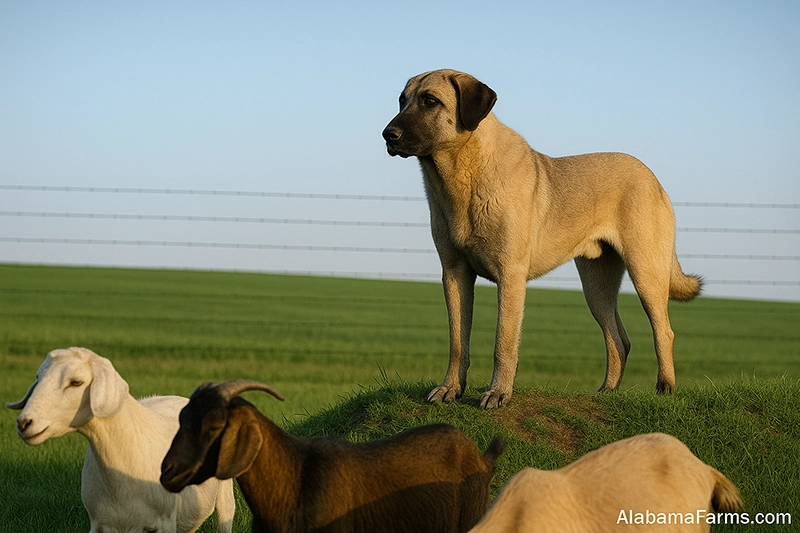
The Anatolian Shepherd is a large and powerful guardian dog that is widely respected for its focus and stamina. Farmers who deal with persistent predators often prefer this breed because it is naturally alert and quick to respond. An Anatolian Shepherd tends to stay close to the herd and takes its job very seriously. This makes it an excellent match for farms with wide open acreage or rolling hills where long distance visibility is important.
Despite its size and strength, the Anatolian Shepherd is gentle with the animals it protects. It learns routines quickly and becomes familiar with the daily rhythm of the farm. The breed also handles heat well, which makes it particularly suited for Alabama’s hot summers. Many farmers choose the Anatolian because it performs well with a variety of livestock including goats, cattle, and poultry.
Maremma Sheepdog
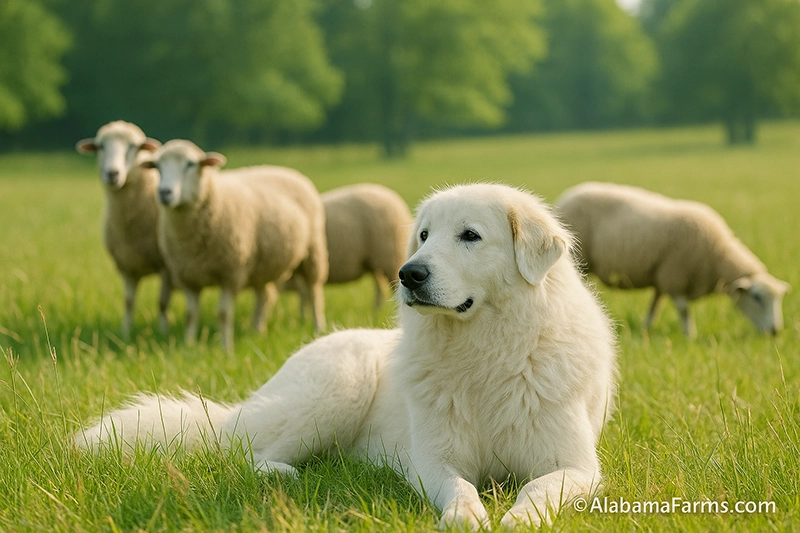
The Maremma Sheepdog is valued for its calm and independent personality. This breed has been guarding flocks in rural landscapes for centuries, which makes it a strong fit for Alabama homesteads and hobby farms. Maremmas tend to stay close to their animals and develop a quiet but effective presence. Farmers appreciate that the breed works confidently without requiring constant direction.
Maremmas do well with smaller herds and can be a good match for farmers who want a dog that is protective without being overly dominant. Their steady temperament helps them earn the trust of both livestock and families. They handle cooler seasons with ease and adapt well to Alabama’s warm climate when provided shade and access to water.
Komondor
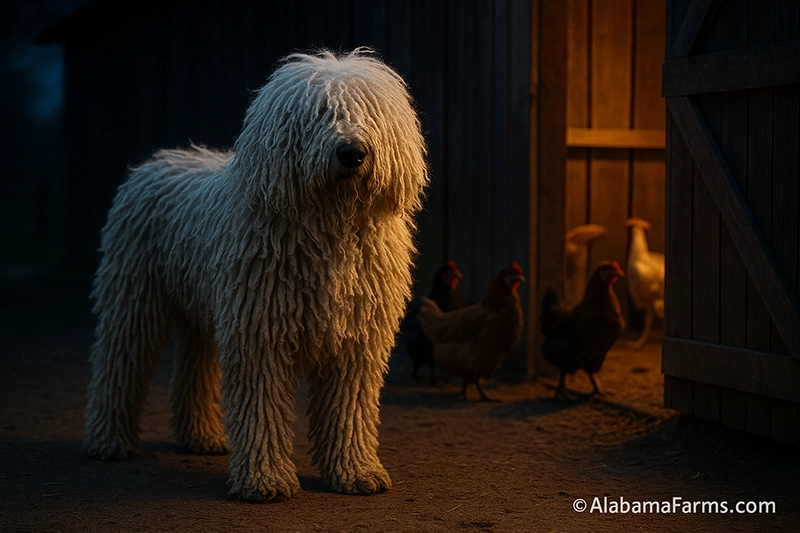
The Komondor is immediately recognizable for its long, corded coat, which provides both protection and weather resistance. This coat helps shield the dog from bites during predator encounters and reduces heat absorption from direct sunlight. The breed is powerful and watchful, which makes it suitable for farms that want a guardian with strong physical presence.
Komondors are naturally independent and do best when they are raised alongside the animals they will protect. Once bonded, they remain loyal and calm, relying on their judgment to decide when to act. Although less common in Alabama than the Great Pyrenees or Anatolian Shepherd, the Komondor is gaining attention among farmers who want a reliable and visually distinctive guardian.
Akbash
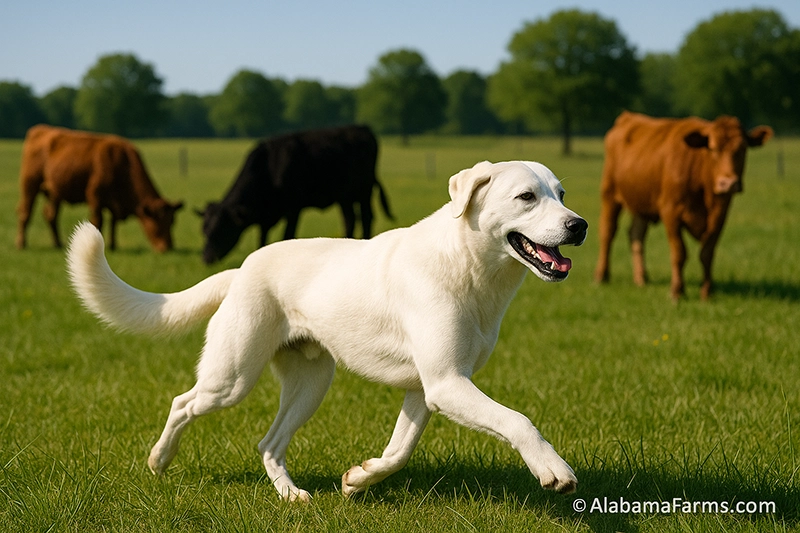
The Akbash is a graceful and athletic guardian dog that blends speed with strong protective instincts. It is known for its ability to move quickly across pastures and respond rapidly to threats. Farmers who keep goats and sheep often select the Akbash because the breed is gentle around smaller livestock while remaining bold when facing predators.
This breed prefers open areas where it can see the landscape clearly. It is naturally quiet and thoughtful, which helps reduce unnecessary stress on the farm. The Akbash handles Alabama’s summers well and adapts to both small and large farms. Its combination of loyalty and awareness has made it a trusted choice for farmers throughout the Southeast.
Karakachan
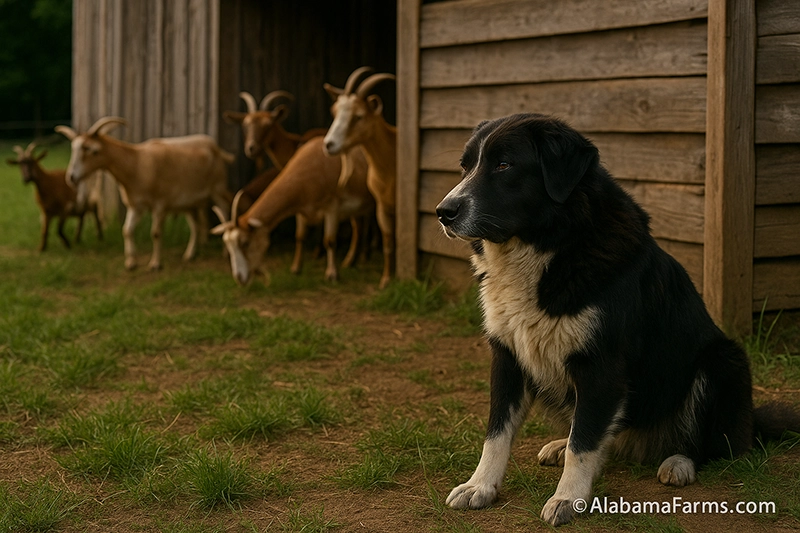
The Karakachan is a serious working breed from Bulgaria and is known for its loyalty and focus. This dog tends to stay very close to the animals it protects, which makes it ideal for goats, sheep, and poultry. Karakachans are dedicated guardians that learn the routines of the farm quickly. Their strong territorial instincts help keep predators from approaching barns, night enclosures, or fence lines.
Farmers appreciate the Karakachan because it balances alertness with calm behavior around livestock. It does not wander far from its herd and works quietly without unnecessary barking. The breed handles Alabama’s heat well and adapts easily to both small and mid-sized farms.
Tibetan Mastiff
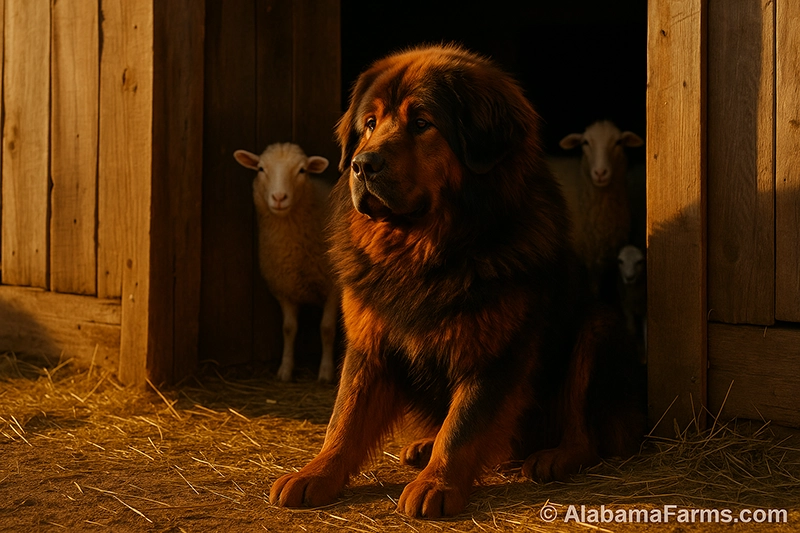
The Tibetan Mastiff is a striking and powerful breed with a long history of guarding livestock in harsh mountain environments. On Alabama farms, these dogs bring a calm temperament during the day and a naturally vigilant presence at night. They are affectionate with the animals they are raised with and form strong bonds with their families, which helps them integrate well into smaller homesteads.
Tibetan Mastiffs tend to be more independent than some other LGDs, which makes them better suited for farmers who want a dog capable of working without frequent supervision. Their thick coat is more comfortable in cooler seasons, but they adapt well to Alabama’s climate when provided shade and proper rest during hot afternoons.
Breeds Not Recommended as Livestock Guardians
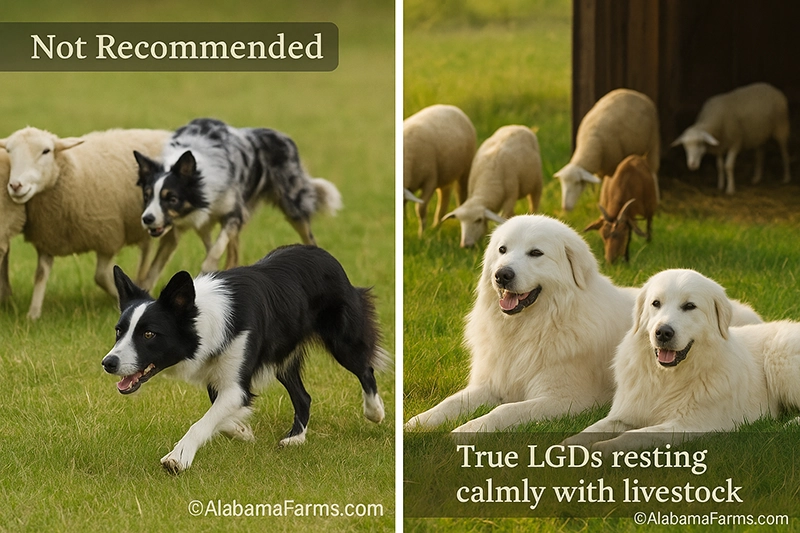
Many popular dog breeds are often mistaken for livestock guardians because they appear protective or intelligent, but they lack the bonding instincts required for true LGD work. Breeds such as Border Collies, Australian Shepherds, and German Shepherds are herding dogs. They are bred to control movement, not provide calm, steady protection. When placed with livestock unsupervised, herding breeds may nip, chase, or stress animals that are depending on a guardian for safety.
Other breeds, such as Siberian Huskies, Rottweilers, and standard protection breeds, are also not suitable for LGD work. These dogs may be loyal companions, but they do not naturally bond to livestock and are more likely to roam or display high prey drive. Farmers benefit from choosing breeds specifically developed to live peacefully with animals and remain gentle while being highly protective. The right LGD helps reduce losses and supports a balanced farm environment.
Why LGDs Matter in Alabama
Livestock guardian dogs are an essential part of farm life in Alabama. Each breed brings unique strengths that support the safety and well being of goats, sheep, cattle, chickens, and other animals. When matched with the right environment and herd size, these dogs form strong bonds and become dependable partners. They provide natural and consistent protection, allowing farms to operate smoothly while reducing losses from predators. For farmers across Alabama, a well trained guardian dog is more than a protector. It is a valued member of the farm.