
Backyard wildlife is one of the quiet joys of living in Alabama. The state’s rich biodiversity means that even a casual look out the kitchen window might reveal birds, small mammals, reptiles, or helpful insect species going about their daily routines. Whether you live in a neighborhood, on a rural homestead, or in the foothills of the Appalachians, Alabama’s backyards are full of life and activity worth appreciating.
Understanding these common species helps homeowners and small farmers identify what’s normal, what’s beneficial, and what might require a little management. This guide walks through the most familiar backyard animals you’ll encounter across the state, combining approachable learning with practical insights for everyday life.
Gray Squirrels
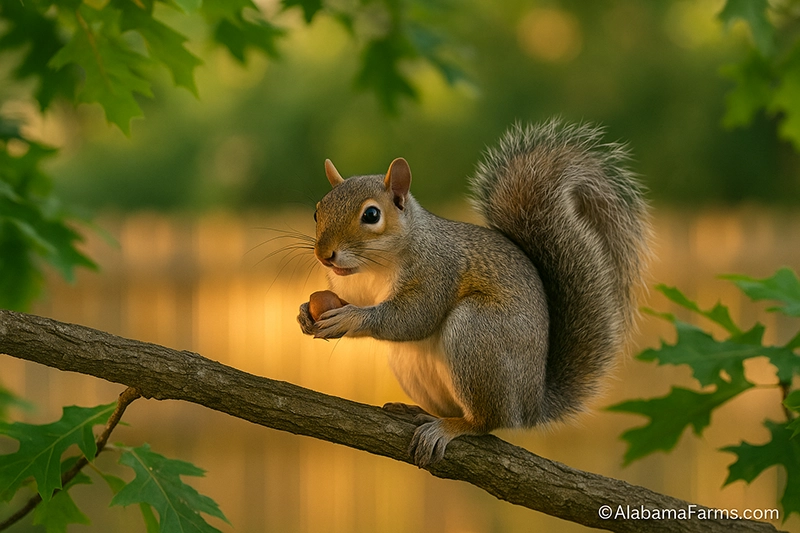
Gray squirrels are among the most recognizable backyard animals in Alabama, often darting across fences or scampering up oak trees with acorns tucked under their chins. Their agility and energy make them fun to watch, especially in the early mornings when they’re most active. These squirrels thrive in both suburban and rural settings because they adapt easily to bird feeders, fruit trees, and scattered nuts.
Despite their playful appearance, gray squirrels play an important ecological role. They naturally disperse seeds through their caching behavior, which helps forests regenerate and spread. Homeowners may want to secure bird feeders or protect garden beds, but generally, squirrels are harmless residents that contribute to a healthy backyard ecosystem.
Eastern Cottontail Rabbits
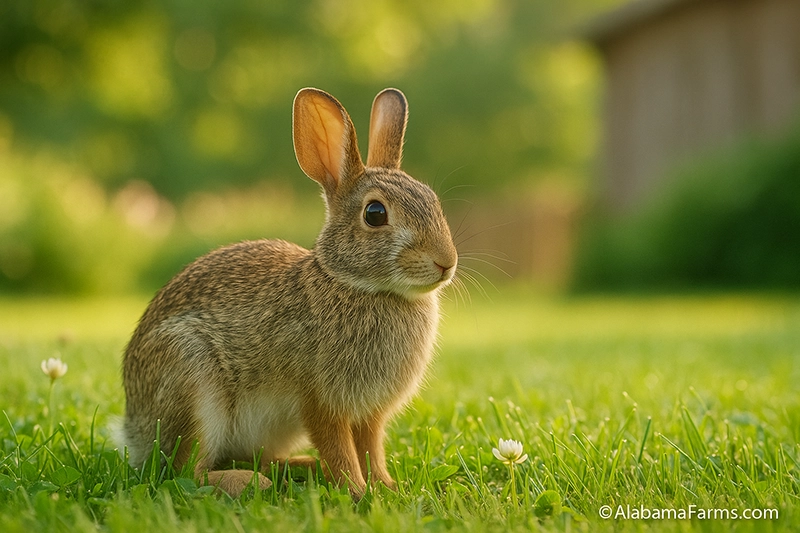
Cottontail rabbits are another common sight, especially in neighborhoods with trimmed lawns and gardens. Their soft brown fur and distinct white tails make them easy to recognize as they nibble clover or hop across the yard at dusk. These rabbits prefer open grassy areas near shrubs where they can quickly hide from predators.
While charming, cottontails can become enthusiastic grazers in vegetable gardens. Installing low fencing or planting strong-scented herbs around garden beds can help deter them. Still, many Alabama families enjoy seeing rabbits in their yards, and their presence often signals a balanced ecosystem with adequate shelter and natural food sources.
Raccoons
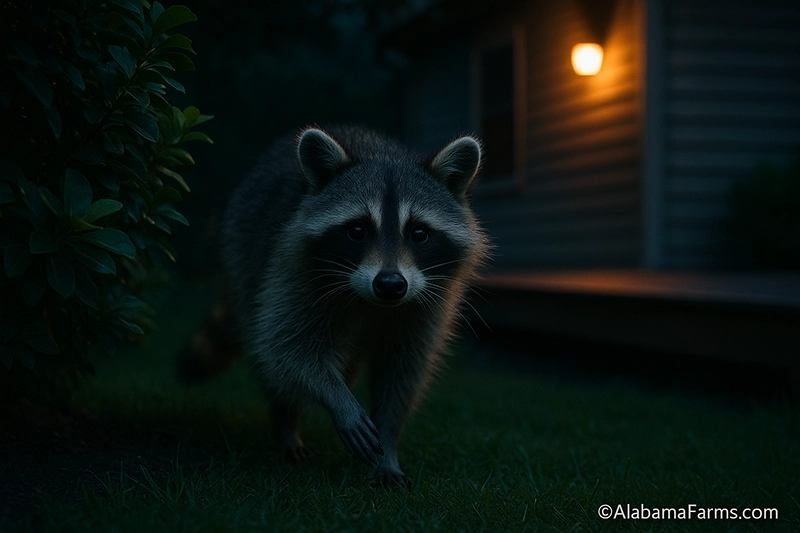
Raccoons are highly intelligent and resourceful animals frequently seen throughout Alabama. Recognizable by their bandit-like mask and ringed tail, raccoons explore backyards at night searching for food. They often investigate trash cans, pet bowls, and compost piles, using their dexterous paws to pry lids open or manipulate objects.
Their adaptability can lead to mischief, but raccoons also perform useful functions. They help clean up fallen fruit, insects, and small rodents. Homeowners can minimize conflict by securing trash bins, feeding pets indoors, and removing food attractants. When left undisturbed, raccoons mostly keep to themselves and remain an interesting part of Alabama’s nocturnal wildlife.
Eastern Box Turtles
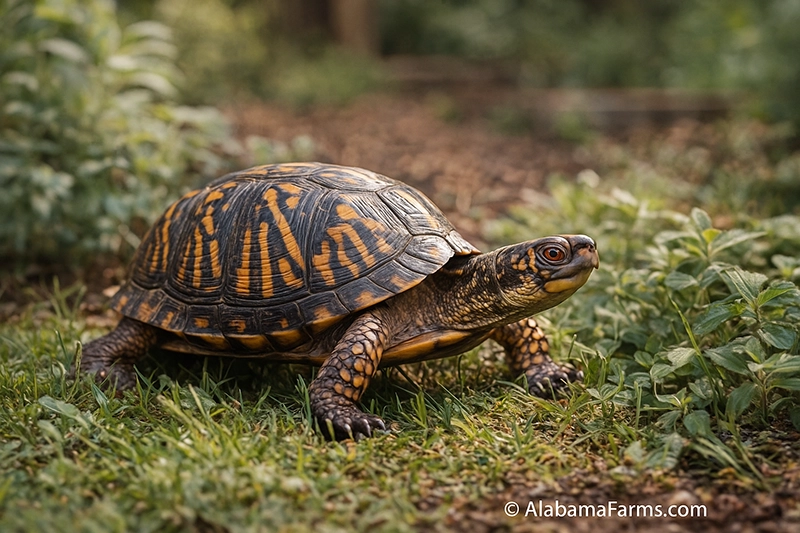
Box turtles are gentle and slow-moving reptiles you may spot near flower beds, wooded edges, or damp shaded areas. Their domed shells and orange-patterned markings make them easy to identify. These turtles spend much of their time foraging for berries, mushrooms, insects, and even earthworms, which keeps them busy during humid mornings or after rainfall.
Because box turtles live long lives and maintain small home ranges, seeing the same turtle return year after year is fairly common. They are harmless and beneficial to gardens by feeding on pests. If one wanders into your yard, it’s best to simply let it continue its path without relocating it; box turtles thrive when left in familiar territory.
Northern Cardinals
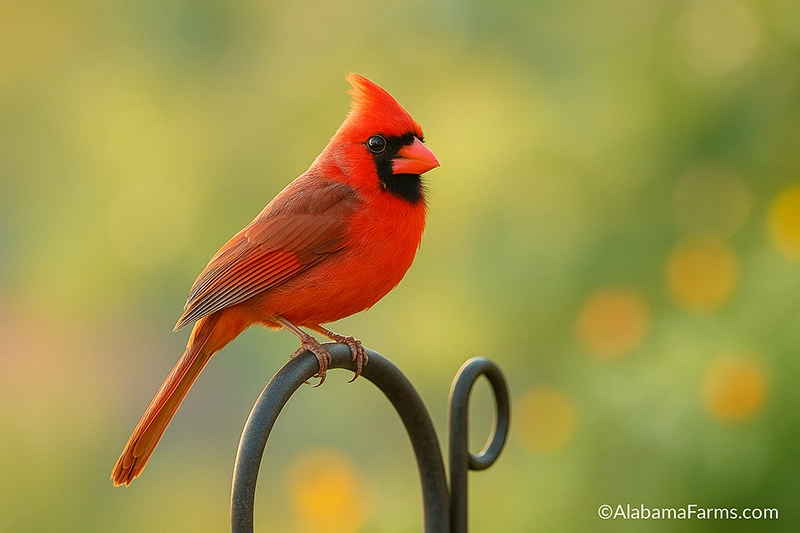
Cardinals are beloved backyard birds across Alabama thanks to their bright red feathers and distinctive crest. Males stand out boldly against foliage, while females carry warm tan and red tones that blend into their surroundings. Cardinals frequent bird feeders, especially sunflower seed mixes, making them regular guests for homeowners who enjoy watching birds from the porch.
These songbirds are active year-round in Alabama, which means they bring color to winter landscapes and music to warm summer mornings. They also contribute to seed distribution and insect control, offering natural benefits to backyard gardens. Their territorial nature often leads to playful chases or vocal exchanges that bring life to any yard.
Red Foxes
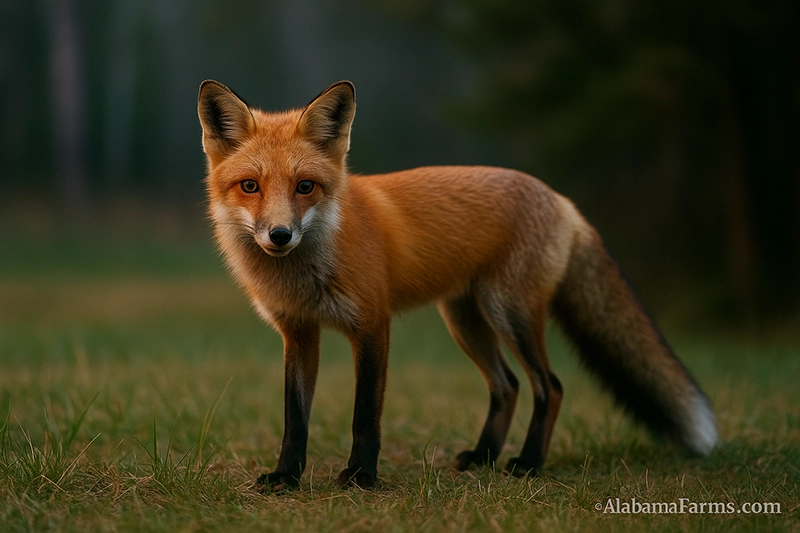
Red foxes occasionally appear at the edges of neighborhoods or near rural homes, especially during quiet early mornings or late evenings. Their reddish coat, white belly, and bushy tail with a white tip make them unmistakable. Foxes generally avoid people, preferring wooded areas and open fields where they can hunt small prey such as rodents, insects, and birds.
Despite their reputation, foxes rarely pose a threat to pets or livestock when proper fencing is in place. In fact, they help control rodent populations. Observing a fox from a distance can be a memorable backyard moment, offering a glimpse into Alabama’s more elusive wildlife.
Barred Owls
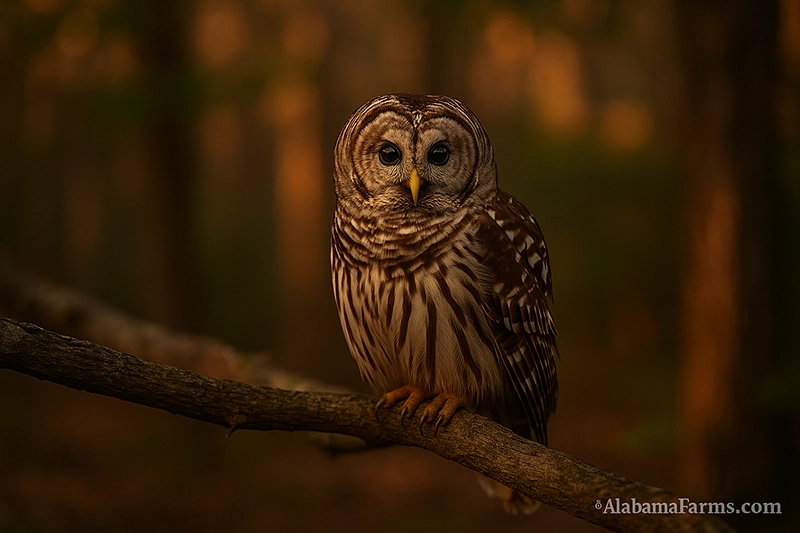
Barred owls are known for their haunting “who-cooks-for-you?” call that echoes through Alabama woodlands at night. Occasionally, homeowners spot them perched on fence posts or gliding silently across the backyard in search of prey. Their large, dark eyes and mottled brown feathers give them a wise and mysterious appearance that fascinates many birdwatchers.
With a diet centered on small mammals, owls play an important role in keeping rodent populations under control. Encouraging healthy woods or leaving tall trees in place creates habitats that allow these birds to thrive near your home. For many families, hearing an owl call in the evening adds natural charm to life in Alabama.
Opossums
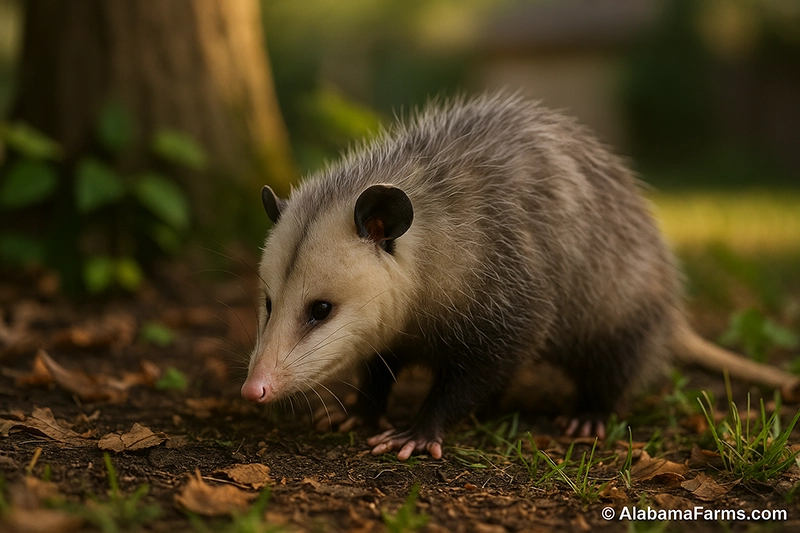
Opossums are often misunderstood but are actually beneficial and gentle animals. They wander through Alabama backyards at night searching for insects, fallen fruit, and even ticks, which they eat in large quantities. Their slow walk, pink nose, and gray fur make them easy to identify, and despite their unusual appearance, they pose very little risk to people or pets.
Opossums help reduce pest populations and act as natural cleanup crews for organic waste. They’re non-aggressive and prefer to avoid conflict, often playing dead when frightened. Welcoming opossums as part of your backyard ecosystem can contribute to a healthier, more balanced natural environment.
A Final Look at Alabama’s Backyard Wildlife
Alabama backyards host a wide range of wildlife, from energetic squirrels and colorful songbirds to quiet reptiles and helpful nocturnal visitors. By learning to identify these common species, homeowners gain a better understanding of their local environment and a deeper appreciation for the natural world. Each animal brings its own role and benefits, contributing to the balance and beauty of backyard life across the state. Observing and coexisting with these creatures creates a richer connection to Alabama’s diverse outdoors.