
Pickling is one of the oldest and most reliable ways to preserve fresh produce, and it remains a staple in home kitchens across Alabama. From crisp cucumbers and spicy okra to creative combinations like pickled carrots, onions, and even green tomatoes, pickling allows gardeners and home cooks to extend the life of their harvest while adding flavor and versatility to everyday meals.
This guide explores everything you need to know about pickling vegetables, including essential techniques, safety basics, and simple recipes ranging from classic refrigerator pickles to creative brines that highlight seasonal Alabama produce.
What Makes Pickling So Special?
Pickling combines two powerful preserving methods: acid and salt. When vegetables are submerged in vinegar or fermented in salt brine, harmful bacteria cannot survive. This creates an environment where vegetables stay crisp, flavorful, and safe to eat for long periods.
Pickling also enhances the natural character of vegetables. A cucumber becomes tangy and refreshing. Carrots become sweet and zesty. Onions transform into bright, colorful garnishes that elevate tacos, burgers, salads, and sandwiches.
Whether you grow your own produce or buy it from Alabama farmers markets, pickling helps you capture the season in a jar.
Two Main Types of Pickling
1. Quick Pickling (Refrigerator Pickles)
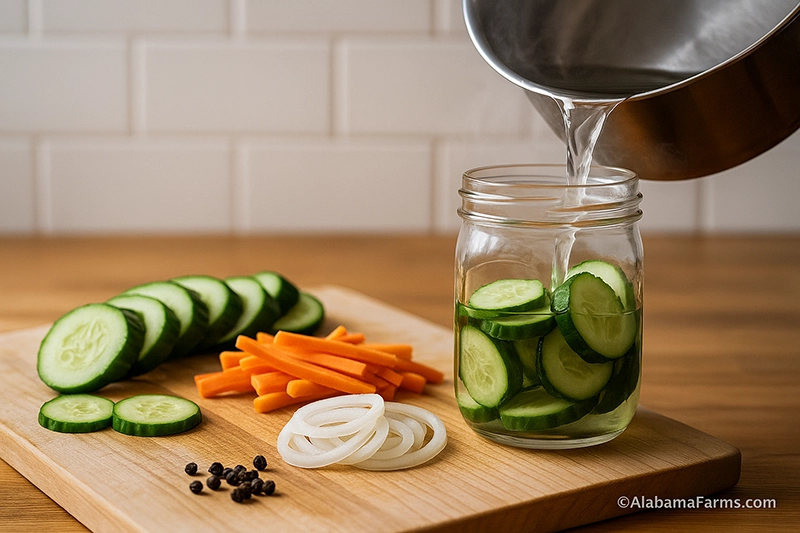
Quick pickles are made by pouring a hot vinegar brine over vegetables, then storing them in the refrigerator. They are ready within hours and keep for several weeks.
They are ideal for beginners because they require no fermentation, no special equipment, and very little time.
2. Fermented Pickling
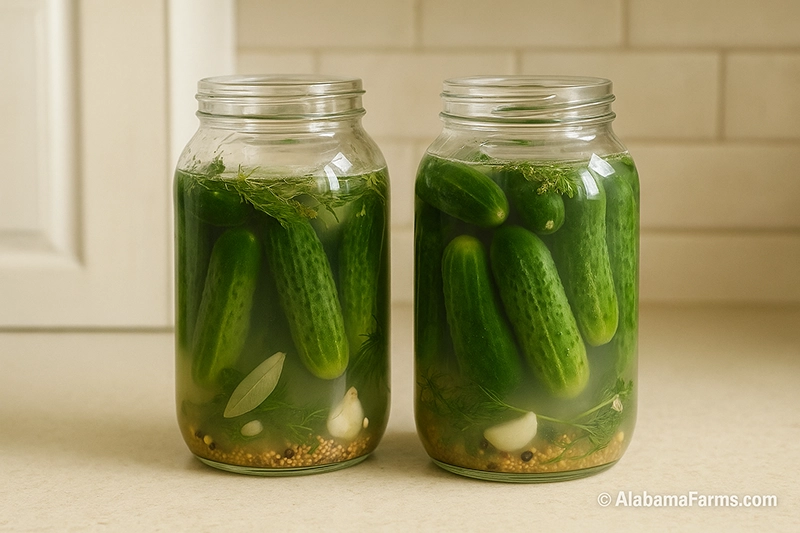
Fermented pickles use saltwater brine instead of just vinegar. Beneficial bacteria naturally present on the vegetables convert sugars into lactic acid, which creates a tangy, complex flavor.
This method takes longer but produces classic fermented foods such as:
• Traditional dill pickles
• Sauerkraut
• Kimchi
• Fermented carrots or radishes
Fermented vegetables last longer and offer probiotic benefits.
Essential Equipment for Pickling
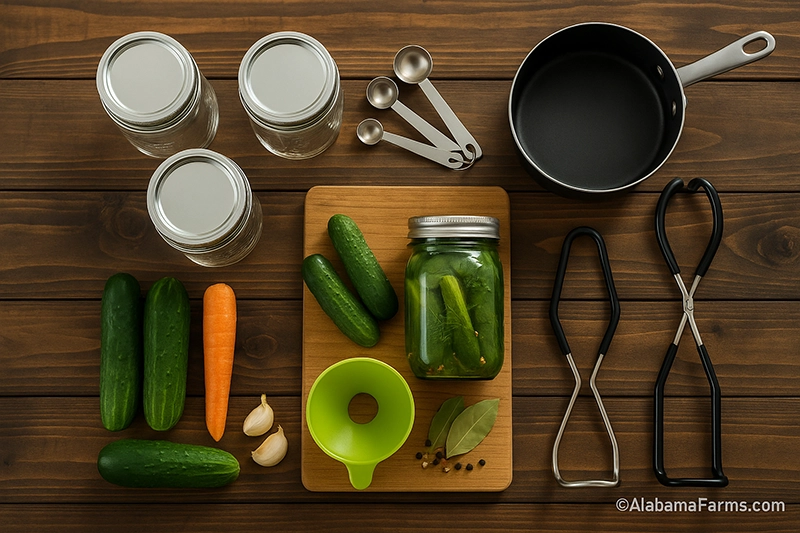
Most pickling methods only require a few basic tools:
• Mason jars with lids
• A small pot for heating brine
• Measuring cups and spoons
• A sharp knife
• A clean workspace
• Optional: canning funnel and jar tongs
• Optional: A bubble remover and headspace measuring tool
If you choose to water-bath can your pickles for room-temperature storage, you will need a large canning pot and racks.
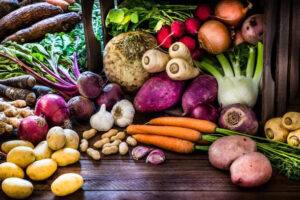
Choosing the Best Vegetables for Pickling
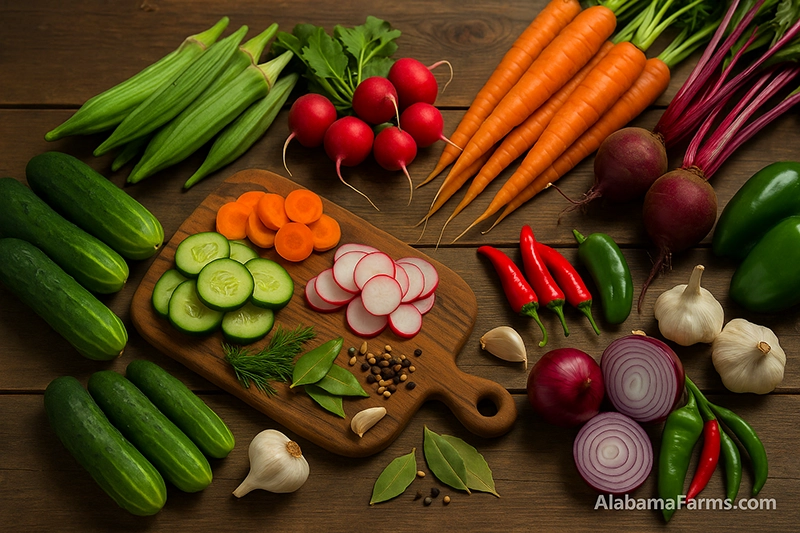
Nearly any vegetable can be pickled, but some work especially well:
• Cucumbers
• Okra
• Carrots
• Green beans
• Cauliflower
• Beets
• Radishes
• Red or sweet onions
• Jalapeños
• Cabbage
• Garlic
For best results, choose vegetables that are fresh, firm, and free of bruises. Alabama gardeners will find cucumbers, okra, peppers, and onions particularly abundant during peak harvest seasons.
Classic Quick Pickle Brine
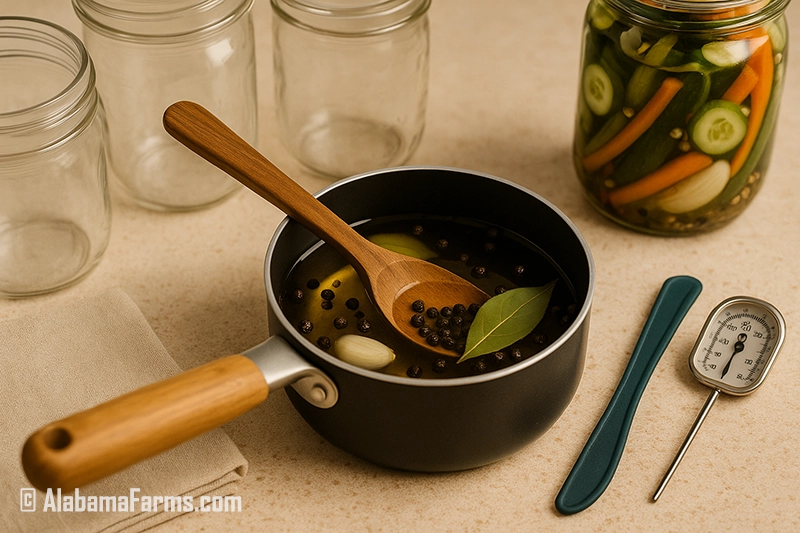
This universal brine works for almost any vegetable.
Ingredients
• 1 cup white vinegar
• 1 cup water
• 1 tablespoon salt
• 1 tablespoon sugar
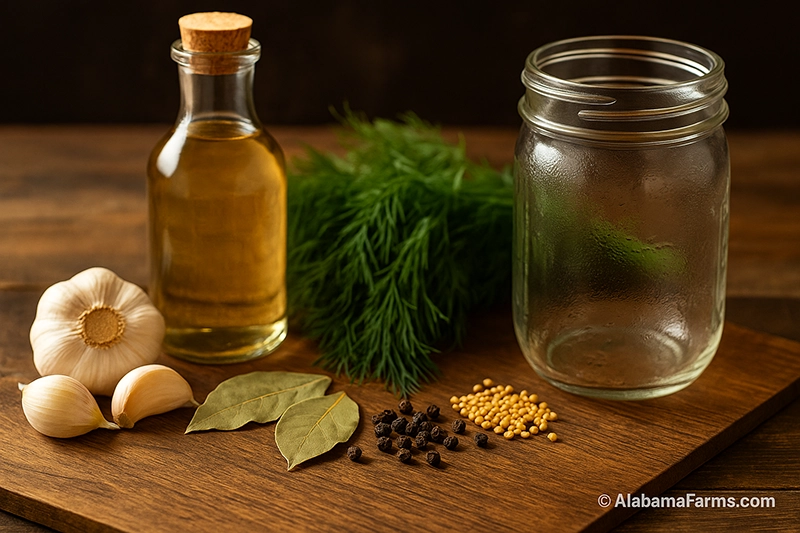
• Optional spices: peppercorns, garlic, dill, bay leaves, mustard seeds, red pepper flakes
Instructions
- Combine vinegar, water, salt, and sugar in a pot.
- Heat until everything dissolves.
- Pack sliced or whole vegetables into a clean jar.
- Add garlic, herbs, or spices as desired.
- Pour the hot brine over the vegetables.
- Close the lid and refrigerate.
Pickles taste best after 24 hours and keep for four to six weeks.
Classic Dill Pickle Spears
This is the flavor that most people imagine when they think of pickles.
Ingredients
• 4 to 5 small cucumbers
• 1 cup vinegar
• 1 cup water
• 1 tablespoon salt
• 1 tablespoon sugar
• 2 garlic cloves
• Fresh dill sprigs
• 1 teaspoon whole peppercorns
Instructions
- Cut cucumbers into spears.
- Pack them tightly into a jar with garlic and dill.
- Heat brine ingredients in a pot until dissolved.
- Pour brine into the jar.
- Refrigerate at least one day before eating.
Pickled Red Onions (Bright and Versatile)
Pickled red onions are perfect for tacos, burgers, salads, grilled meats, grain bowls, and sandwiches.
Ingredients
• 1 large red onion, thinly sliced
• 1 cup vinegar
• ½ cup water
• 1 tablespoon sugar
• 1 teaspoon salt
• Optional: sliced jalapeño, peppercorns, garlic
Instructions
- Pack onions into a jar.
- Heat brine ingredients until dissolved.
- Pour hot brine over onions.
- Refrigerate for at least one hour.
They keep for several weeks.
Sweet and Spicy Pickled Carrots
Perfect as snacks, salad toppers, or additions to charcuterie boards.
Ingredients
• 2 cups sliced carrots
• 1 cup vinegar
• 1 cup water
• 2 tablespoons sugar
• 1 tablespoon salt
• 1 garlic clove
• 1 teaspoon red pepper flakes
Instructions
- Add carrots to a jar.
- Heat vinegar, water, sugar, and salt.
- Add garlic and red pepper.
- Pour brine over carrots.
- Refrigerate for 24 hours.
Fermented Garlic Dill Pickles (Naturally Tangy)
This recipe requires no vinegar. The tanginess comes from natural fermentation.
Ingredients
• 5 to 6 small cucumbers
• 2 tablespoons salt
• 4 cups water
• 3 garlic cloves
• Fresh dill
• Optional: mustard seed, peppercorns, grape leaf for crispness
Instructions
- Dissolve salt in water to create a brine.
- Pack cucumbers into a jar with garlic and dill.
- Pour the brine over them.
- Leave the jar loosely covered on the counter for 3 to 5 days.
- Taste daily.
- When they reach your desired flavor, refrigerate them to halt fermentation.
Creative Pickle Ideas for Alabama Gardens
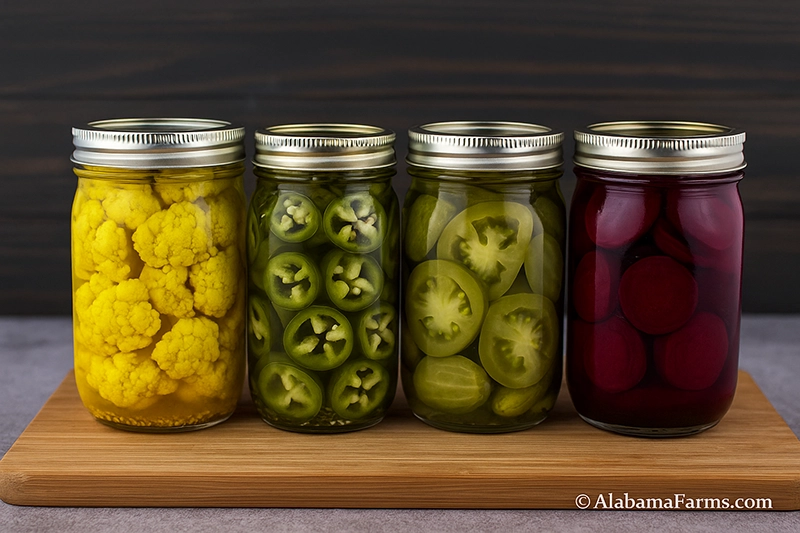
1. Pickled Green Tomatoes
A Southern classic that adds tang to sandwiches and fried dishes.
2. Pickled Okra
Crisp, spicy, and perfect for charcuterie boards or Bloody Mary garnishes.
3. Pickled Jalapeños
Adds heat to nachos, tacos, and scrambled eggs.
4. Pickled Beets with Citrus
Bright, sweet, and earthy. Excellent with goat cheese or salads.
5. Pickled Cauliflower with Turmeric
Golden yellow and mildly spiced, ideal for serving with curries or roasted meats.
Tips for Safe Pickling
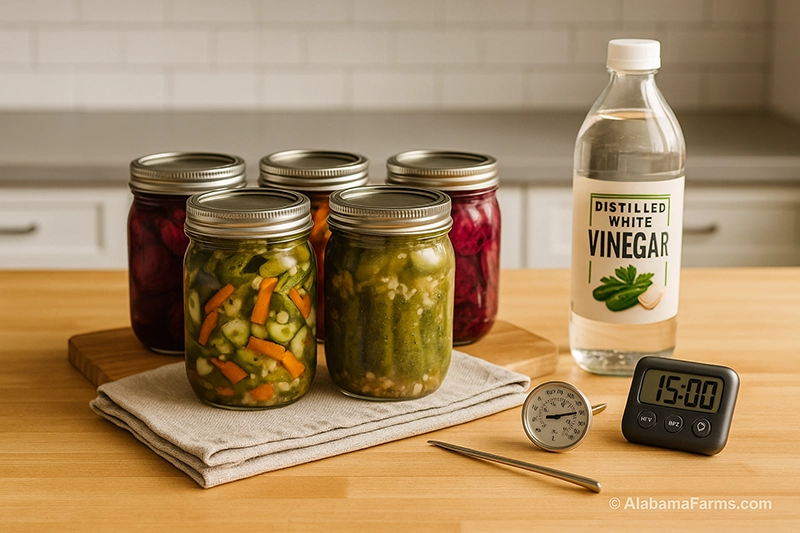
• Always use clean jars and lids.
• Refrigerate quick pickles unless water-bath canned.
• Use the correct ratio of vinegar or salt for safe acidity.
• Keep vegetables completely submerged to prevent spoilage.
• Use a bubble remover to release trapped air pockets before sealing jars, since leftover air can cause uneven acidity or spoilage
• Label each jar with date and ingredients.
Pickling is an easy and rewarding way to preserve fresh Alabama produce while adding rich, tangy, and customizable flavors to your meals. Whether you prefer traditional dill spears, spicy okra, bright onions, or creative combinations, pickling connects seasonal harvests with year-round enjoyment.
With a few simple ingredients and a handful of jars, anyone can master the art of pickling and begin filling their pantry with colorful creations straight from the garden.