
Monarchs, swallowtails, gulf fritillaries, host plants, and simple ways to attract them.
Butterflies are a familiar sight across Alabama’s farms, homesteads, and gardens, bringing flashes of color to vegetable beds, pasture edges, and rows of cut flowers. Monarchs glide through the state on their long migration, eastern tiger swallowtails dance along woodland borders, gulf fritillaries chase each other over passionflower vines, painted ladies sweep through in sudden colorful waves, and cloudless sulphurs brighten fall fields of goldenrod. Together they form a living thread that connects Alabama’s rural landscapes to the wider natural world.
Yet the beauty we see in the air begins with a quieter story on the leaves below. Each butterfly depends on specific host plants where it lays eggs and where caterpillars grow. These caterpillars—striped, spotted, or spiked—are the hidden engine that sustains butterfly populations. By understanding what they eat, where they live, and how they grow, gardeners and landowners can transform an ordinary corner of their property into a thriving butterfly habitat. Alabama’s rich soils, warm seasons, and abundant native plants make it one of the best places in the South to support both butterflies and the caterpillars that become them.
Monarch Butterflies — Alabama’s Migrating Royalty
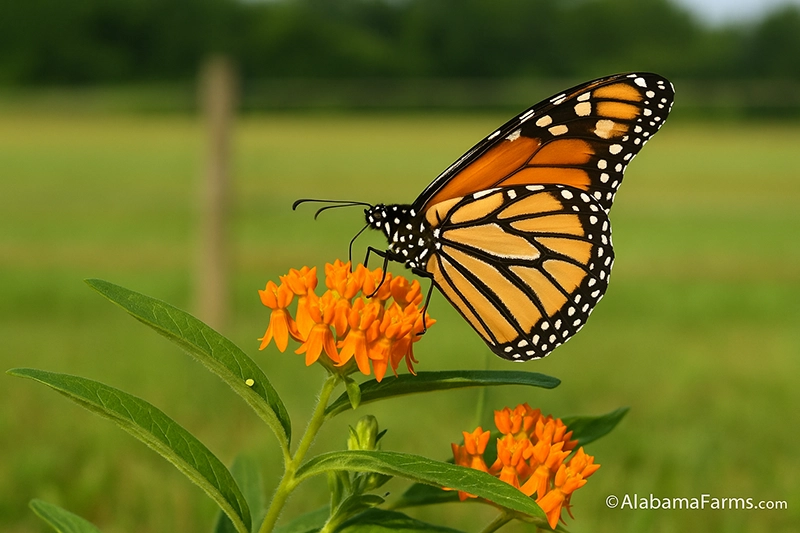
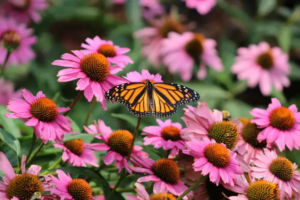
Monarchs are the most iconic butterflies to visit Alabama. Their bold orange wings and incredible migration patterns make them instantly recognizable. Alabama sits along their seasonal pathway, so many rural properties see monarchs pass through in both spring and late summer. Their flight over hay fields, sunflower rows, or wildflower patches is a familiar sight, especially in North and Central Alabama.
Monarchs are entirely dependent on one plant: milkweed. Without milkweed, monarchs cannot reproduce. Alabama’s best native milkweed species include butterfly weed, swamp milkweed, and red milkweed, all of which support egg laying and caterpillar growth. Gardeners who plant native milkweed often discover monarch eggs on the undersides of leaves, followed by hungry striped caterpillars that devour the plant with surprising speed. Each butterfly begins its life as a tiny pearl-like egg, barely noticeable unless you know where to look. Many Alabama gardeners cherish the moment they find their first monarch egg of the season, often in late April or early May.
In rural areas, letting small patches of milkweed grow naturally along fence lines or field margins is one of the easiest ways to help monarchs. Even two or three plants can support an entire generation of caterpillars. Monarchs often return to the same areas year after year, creating a quiet, seasonal tradition for families who observe their journey.
Eastern Tiger Swallowtail — Alabama’s Big and Beautiful Native
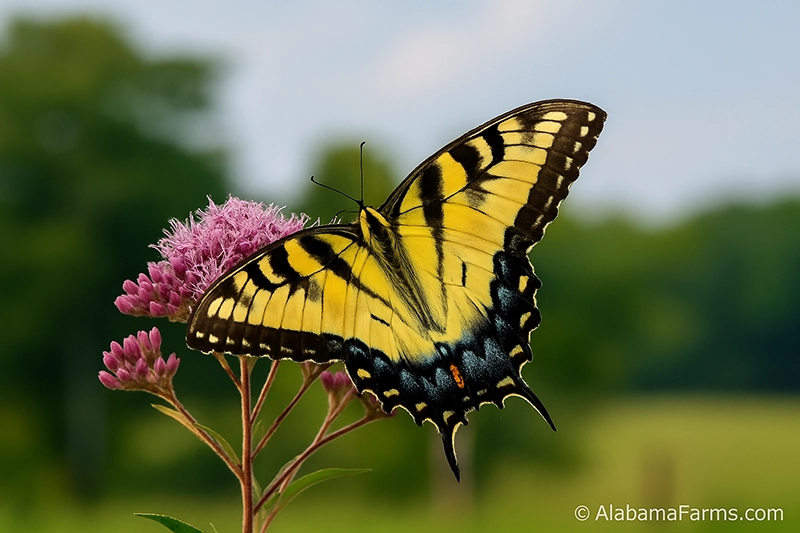
The eastern tiger swallowtail is one of the most beloved butterflies in the South. Its large yellow wings with black tiger-like striping make it impossible to miss as it glides across orchards, pecan groves, or forestry edges. These butterflies begin showing up early in the year during warm springs, sometimes appearing before many flowers have fully bloomed.
Swallowtails rely on a wide range of host plants, including tulip poplar, sweetbay magnolia, wild cherry, ash, and sassafras. Many Alabama farms already contain these trees, which is why tiger swallowtails remain so abundant. Their caterpillars are equally fascinating, starting life as tiny brown larvae that mimic bird droppings for camouflage. As they grow, they shift into bright green caterpillars with large “eyespots” that help scare away predators.
Adult swallowtails are drawn to nectar-rich flowers like phlox, lantana, ironweed, and zinnias. Their strong, fluttering flight makes them frequent visitors in gardens with mixed summer blooms. Children often delight in watching swallowtails circle a flower patch, hovering just close enough to study before drifting away again.
Gulf Fritillaries — Fast, Fiery, and Everywhere
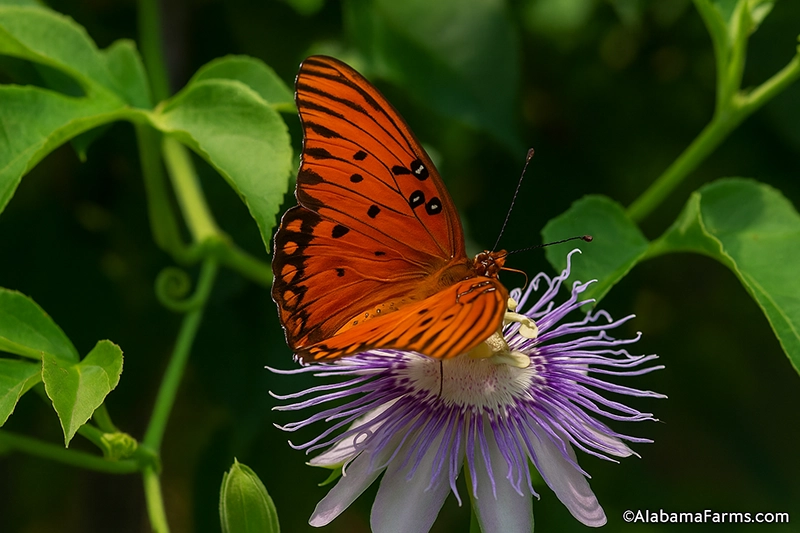
The gulf fritillary is perhaps the most active butterfly found in Alabama gardens. With orange wings that glow like embers in the sun, these butterflies dart rapidly across open spaces, seemingly never sitting still for long. They are especially common in South Alabama but are found statewide when temperatures warm.
Gulf fritillaries have a single host plant: passionflower, also known regionally as maypop. This native vine grows along ditch banks, field edges, and farm fences, and it’s just as happy in a garden trellis. Passionflower’s intricate purple blooms are unmistakable, and the plant supports both eggs and the bright orange-and-black caterpillars that develop into fritillaries. Many gardeners are surprised to discover these spiky-looking caterpillars clustering along passionflower vines during midsummer.
Once the host plant is present, gulf fritillaries return without fail. Their loyalty to specific vines and their high activity levels make them one of the most enjoyable butterfly species to watch.
Meet the Caterpillars — The Hidden Life Beneath the Leaves
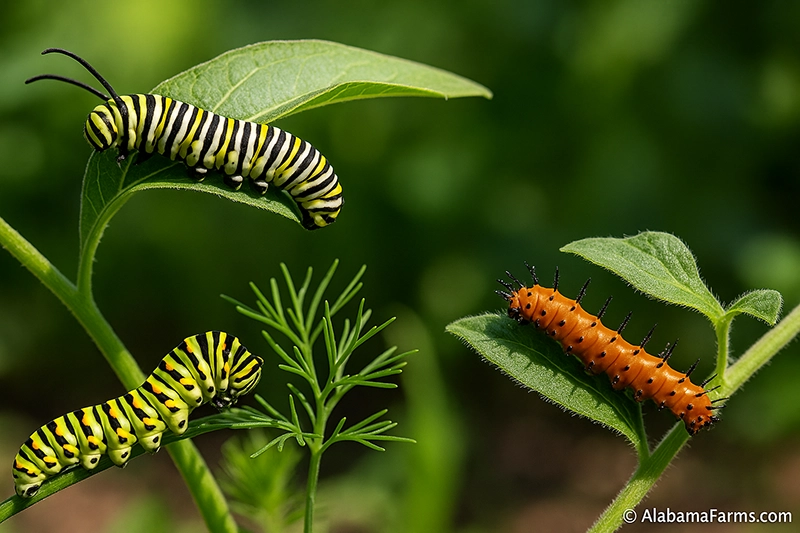
Most people admire butterflies but rarely think about the stages that come before the wings. The caterpillar stage is where most of the growth happens. These small, hungry larvae eat constantly, shed their skin several times, and eventually form chrysalises that blend seamlessly into leaves, stems, and fences.
Monarch caterpillars are bright yellow, white, and black bands, easy to spot once the eggs hatch. They spend about two weeks feeding on milkweed before forming their jewel-like green chrysalis.
Tiger swallowtail caterpillars begin small and brown, disguising themselves as bird droppings, then transform into bright green caterpillars with eyespots. They often rest along magnolia or poplar leaves.
Gulf fritillary caterpillars are unmistakable, with dark spines covering their orange bodies. Despite their intimidating appearance, they are harmless to the touch and enthusiastic feeders on passionflower.
Black swallowtails, another common Alabama species, lay their eggs on herbs such as dill and parsley. Their caterpillars are bright green with black stripes and yellow dots, and gardeners often find them munching on herb beds in mid-summer.
Caterpillars should never be removed unless they are in immediate danger. They are essential to butterfly reproduction and do no harm to their host plants beyond natural, temporary leaf loss. Even small chewed areas are signs of a healthy butterfly ecosystem.
Butterfly Seasons in Alabama — What Appears and When
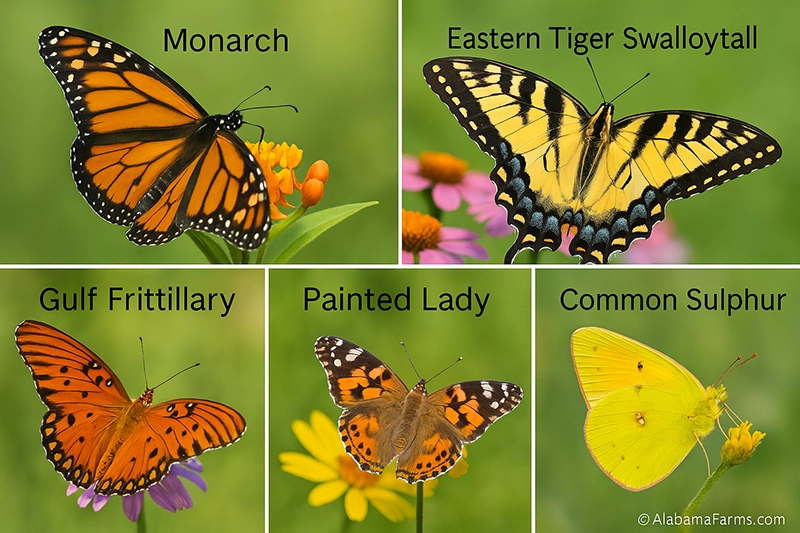
Understanding the timing of butterfly activity helps gardeners and landowners plan their plantings.
Monarchs
Late spring migration in April and May, then a stronger return in late summer from August through September.
Gulf Fritillaries
Most active from July through October, thriving in the hottest months.
Eastern Tiger Swallowtails
Often appear as early as March during warm years, remaining visible into September.
Black Swallowtails
Peak from May through August in herb gardens.
Painted Ladies
Often appear in waves during late spring.
Common Sulphurs and Whites
Found throughout the warm season, especially near clover fields.
These timelines make it easier to plan continuous blooms and host plants throughout the year.
Host Plants — The Secret to Keeping Butterflies Around
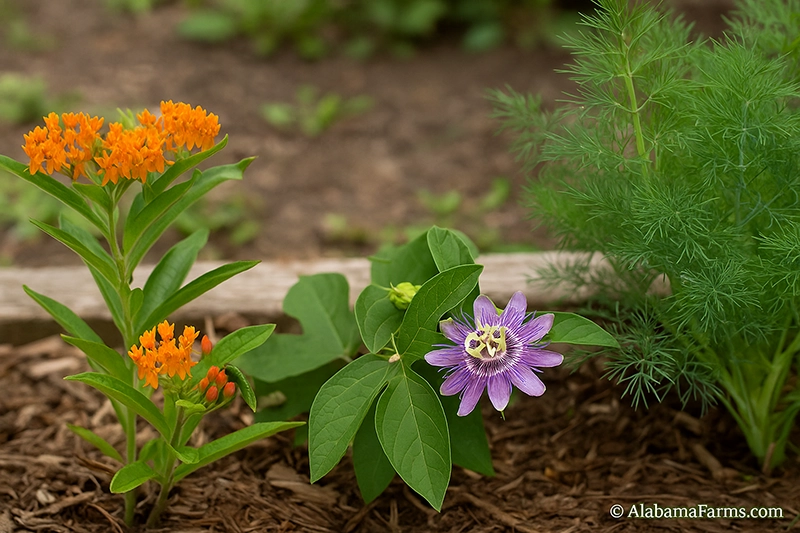
While nectar flowers attract adult butterflies, host plants are what keep them in your garden. Host plants are the specific leaves where butterflies lay eggs and where caterpillars feed until they transform. Alabama’s climate supports a large number of native host plants, and many are already found naturally in rural areas or can be planted easily. Without host plants, nectar flowers alone cannot sustain local butterfly populations.
Key Alabama host plants include:
- Milkweed for monarchs
- Passionflower for gulf fritillaries
- Tulip poplar and magnolia for tiger swallowtails
- Wild cherry and sassafras for various swallowtail species
- Dill, parsley, fennel, and carrot tops for black swallowtails
- Violets for early-season fritillaries
These plants grow well in Alabama soil, and many are already present on farms and natural properties. Including them deliberately in gardens dramatically increases butterfly activity.
Nectar Plants — Fuel for Adult Butterflies
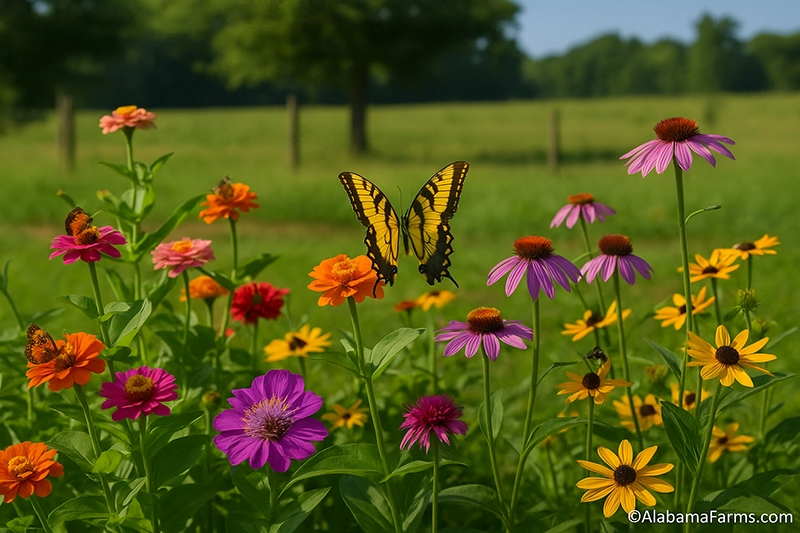
While caterpillars rely on host plants, adult butterflies depend on nectar. Alabama’s long warm season supports an abundance of blooming flowers that attract butterflies throughout spring, summer, and fall.
The most reliable nectar plants include zinnias, coneflowers, black-eyed susans, bee balm, goldenrod, ironweed, lantana, verbena, and phlox. Many Alabama gardeners plant zinnias along vegetable rows, both as cut flowers and as natural pollinator attractors. Coneflowers thrive in heat and poor soil, making them ideal for farm edges and fence rows.
To attract butterflies throughout the year, aim for blooms in early spring, full summer, and late fall. The more continuous the blooms, the more butterflies will treat the garden as a reliable feeding ground.
Creating a Butterfly Habitat — Simple Ways to Attract More
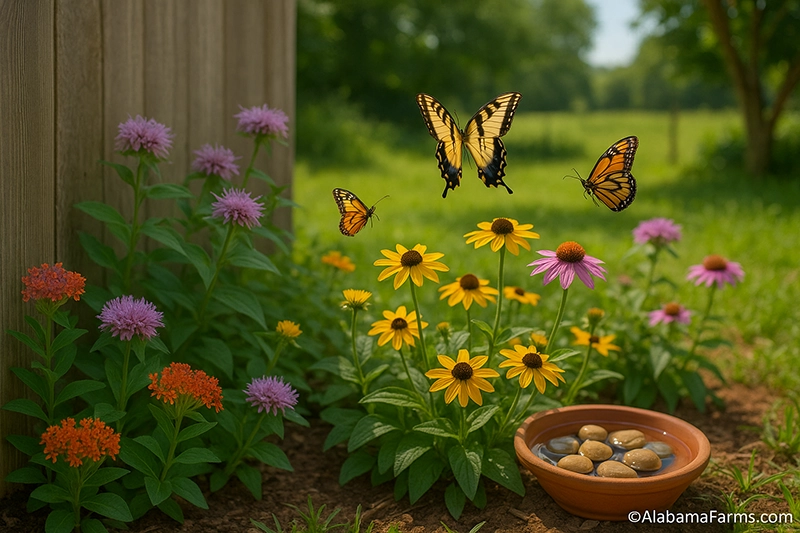
Butterfly habitats do not require elaborate landscaping. Even small changes can have a big impact. The best habitats combine host plants, nectar plants, sunlight, and water sources.
Simple ways to create butterfly habitats include planting mixed flower beds near vegetable gardens, leaving small wild areas untouched, providing shallow water dishes filled with stones, avoiding pesticides, planting flowering borders along fence lines, and adding native shrubs to create sheltered areas.
Many Alabama families enjoy creating a “butterfly corner,” a small area dedicated to pollinator-friendly plants. These corners often become favorite spots for kids who enjoy finding caterpillars or seeing butterflies land on brightly colored blooms.
A Butterfly Troubleshooting Guide for Alabama Gardeners
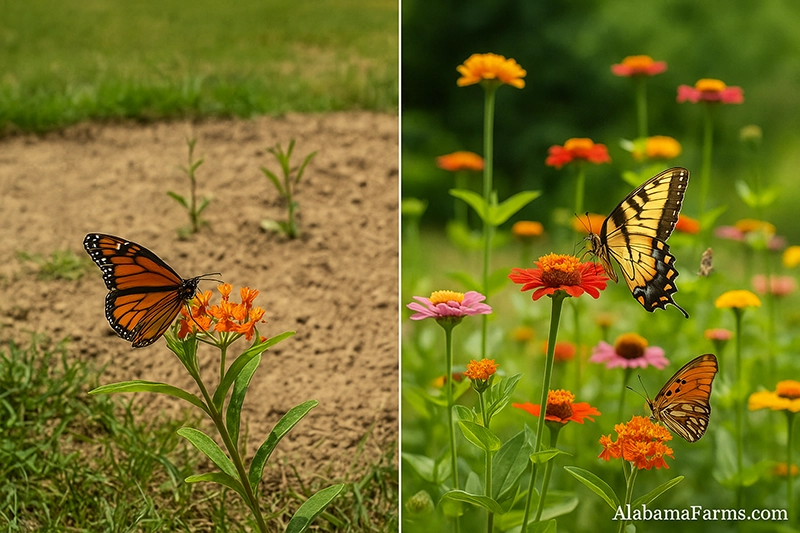
Sometimes butterflies seem scarce even in well-planted gardens. Understanding the causes can help restore balance.
Lack of host plants
Without the correct caterpillar food, adult butterflies will pass through without staying.
Too much cleanup
Removing leaf litter and trimming stems too early can eliminate overwintering chrysalises.
Excessive pesticide use
Even organic sprays harm caterpillars and eggs.
Lack of water
A simple shallow dish with gravel can dramatically increase butterfly visits.
Not enough plant diversity
A mix of shapes, heights, and blooming times keeps butterflies comfortable.
With these adjustments, most gardens see immediate improvement.
Butterflies and Kids — A Natural Classroom
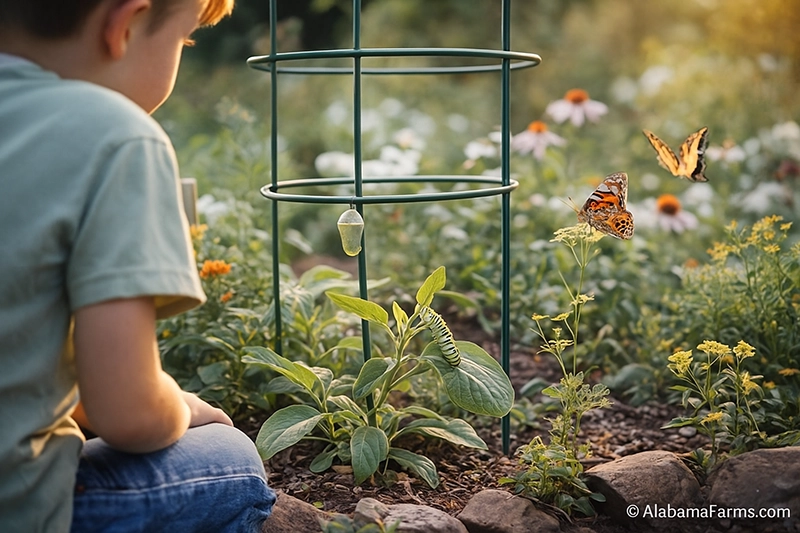
Butterflies offer a gentle entry into nature education for children. Many Alabama families grow small milkweed or dill patches so kids can find monarch or black swallowtail caterpillars. Watching a caterpillar spin its chrysalis and later emerge as a butterfly is a memorable experience.
Child-friendly butterfly activities include planting easy nectar flowers like zinnias, searching for eggs under host plant leaves, photographing butteries in the garden, and raising a single caterpillar indoors with proper care and release.
These moments turn gardens into outdoor classrooms and create lasting connections to Alabama’s natural world.
A Living Landscape Full of Color
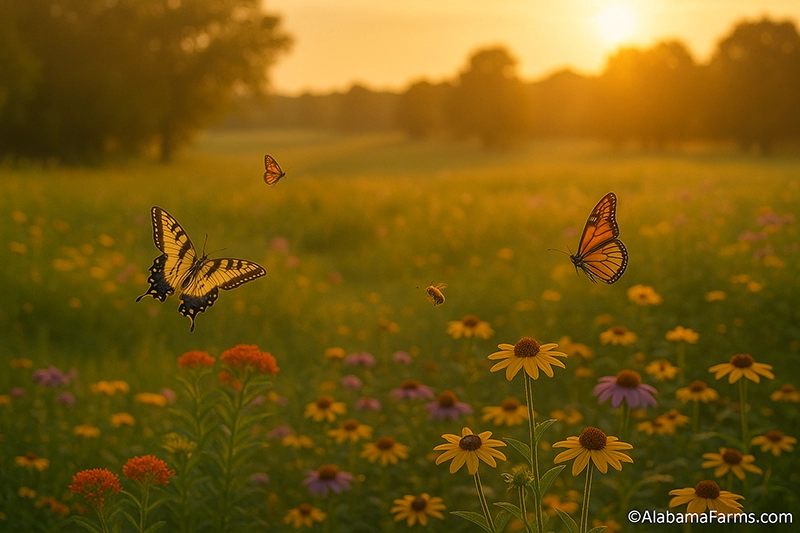
Butterflies bring life, color, and movement to Alabama’s farms and gardens, but their presence is more than decoration. They are pollinators, seasonal indicators, and quiet partners in the health of the land. Supporting them means supporting every stage of their lives, from the milkweed leaf hiding a single monarch egg to the passionflower vine covered in gulf fritillary caterpillars. It means planting native flowers for nectar in every season, leaving wild patches untouched, and recognizing the value of dill plants nibbled by swallowtail larvae or senna leaves shared with sulphurs.
By creating habitats that welcome both butterflies and their caterpillars, Alabamians can help preserve these species for future generations while enriching their own farms and gardens with a natural vibrancy. Whether you are tending a backyard herb patch, managing acres of pastureland, or simply adding a few native plants along a fence line, every effort contributes to a larger, living landscape. With the right plants and a little intention, Alabama’s fields, gardens, and homesteads can continue to host these beautiful visitors year after year, offering a daily reminder of the living world that flourishes all around us.